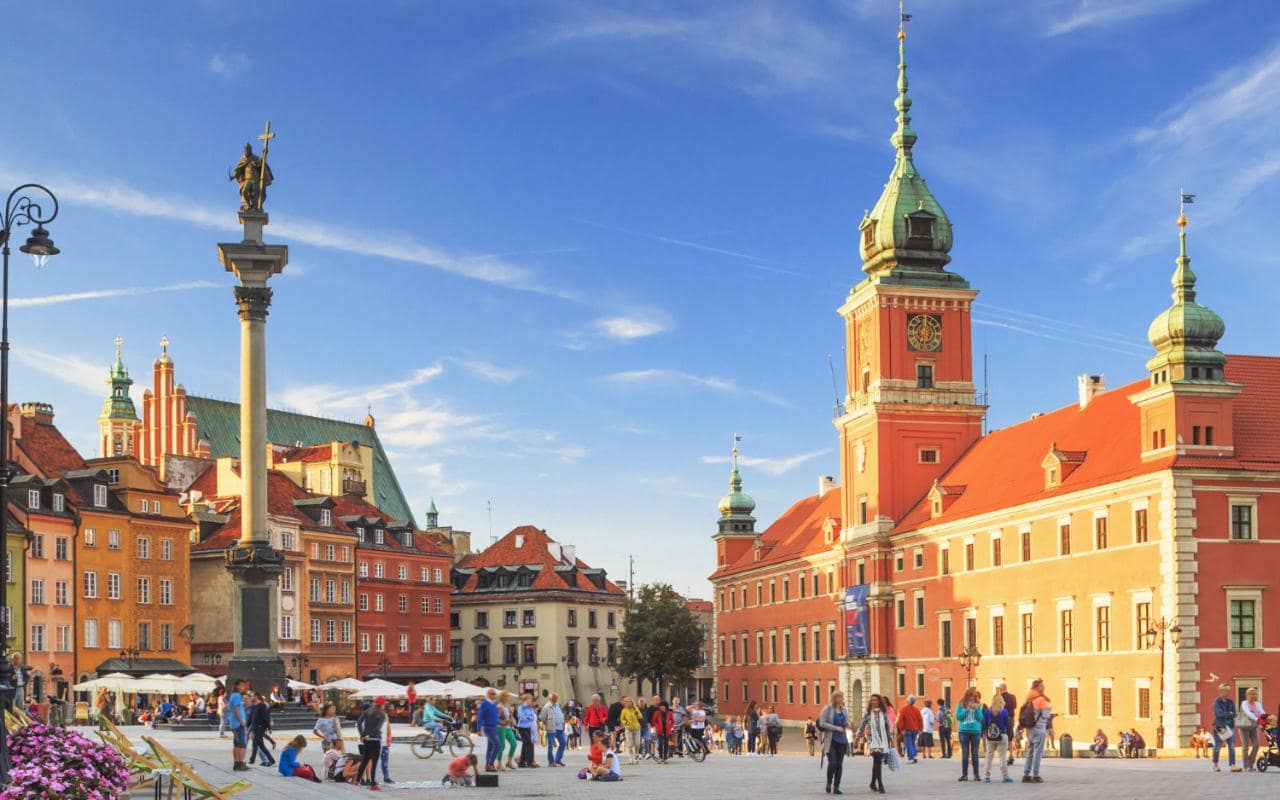
Warsaw is the capital city of Poland, located in the east-central part of the country. The city is notable among other European cities for its indestructibility. After facing major damage while the Swedish and Prussian occupied the area in 1655-1666, it was attacked again in 1794, when the Russians massacred the people in Praga. In 1944, after the Warsaw Uprising failed, the city was destroyed by Adolf Hitler’s order. However, in 1945, the people of Warsaw returned, after being run out of their town the previous year, and the city resumed its role in the country. Many of the historical buildings and streets were restored exactly to their former selves.
The emblem of Warsaw is a representation to a creature in a legend. In the legend, the creature led a prince to the site of Warsaw and ordered him to found the city. The creature on the emblem is a mermaid with sword and shield in hand. It has been the emblem since the mid 18th century. The motto of the city is “It defies the storms.”
The climate here is moderate and cool, the westerly winds bringing frequent changes of weather the average yearly temperature is in the 40s F (around 8 degrees Celsius). Yearly rainfall averages 21 inches, most of which falls in the summer. Snow continues for 50-64 days a year.
The multinational community of Warsaw was transformed because of WW2. Before the event, the community was composed of Polish, Jews, Germans, and Russians. Today, the population is composed of mostly Poles. The population is mostly Roman Catholic. Early 20th century, the Yiddish-speaking Jews accounted for almost 50 percent of the population. From 1939 to 1945, the remains of the former diversity had been destroyed. Warsaw’s Jews were nearly annihilated by the Nazis and their remaining numbers continue to decrease. The intellectuals have also been decimated, the administrative class connected with the republic before the war dispersed, and the working class diminished by deaths and deportations. After the war, the city had to be repopulated by returning refugees, a vast influx of peasants from the countryside, and families of officials connected with the new communist state. The origin of Warsaw remains obscure.
 Welpdidoodlie