Featured

Trieste, Italy

Geographically, Trieste enjoys a unique and beautiful natural location as it is surrounded by the Carsic hills and the Adriatic Sea. The quality of life is high, and one’s leisure time can be spent in tourism, culture and sports without the drawbacks that affect larger Italian cities such as heavy traffic jams, smog, and delinquency. In Trieste, the summers are warm, the winters are long and very cold, and it is partly cloudy year round. Over the course of the year, the temperature typically varies from 38°F to 84°F and is rarely below 30°F or above 90°F. Trieste is not the typical Italian city you may expect. A cultural diversity has been maintained in this city. It has a colorful history that has formed this diversity. From 1382 to 1918, Trieste flourisged as part of Austria, which became the Austro-Hungarian Empire in 1867. In 1918, it was considered one of the most prosperous Mediterranean seaports as well as a capital of literature and music. However, the collapse of the Austro-Hungarian Empire and Trieste’s annexation to Italy after World War I, led to a decline in its economic and cultural importance. As a result, the city lost its strategic and commercial influence. As early as the third millennial BC, the area of what is now Trieste was settled by an Indo-European tribe named the Carni. Afterward, the area was populated by the Histri and Illyrian people, who remained the main civilization until 2000 BC, when the Paleo-Veneti arrived. By 177 BC, the city was being governed by the Roman Republic. It was granted the status of a colony by Julius Caesar, who recorded its name as “Tergeste” in 51 BC. After the end of the Western Roman Empire in 476, Trieste remained a Byzantine military centre. In 788 it became part of the Frank kingdom. From the year 1081 the city came loosely under the Aquileia patriarchy, developing into a free commune at the end of the 12th century.The Castle of San Giusto, built between 1470 and 1630 in the heart of the ancient town on the ruins of the Roman city, is a symbol of that period.Trieste grew into an important port and trade hub in the 17th and 18th century. The city was occupied by French troops three times during the Napoleonic Wars. It was annexed to the Illyrian Provinces by Napoleon. During this period Trieste lost its autonomy  and the status of free port was interrupted. After the Napoleonic Wars, Trieste was returned to Austria and the city’s role as the main Austrian commercial port and shipbuilding center was later emphasized by the foundation of the Austrian Lloyd merchant shipping line in 1836, whose headquarters stood at the corner of Piazza Grande. The modern Austro-Hungarian navy used Trieste as a military base and it’s shipbuilding. The particular Friuli dialect, called Tergestino, spoken until the beginning of the 19th century, had been gradually supplanted by Triestine and other languages  including Italian, German and Slovenian. While Triestine was the dialect  of the majority of the population, German was the language of the Austrian bureaucracy and Slovenian was the language of the surrounding villages. Viennese architecture and coffee houses still dominate the streets of Trieste today. After World War 1 ended and Austria-Hungary disintegrated, Trieste was transferred to Italy (1920) along with the whole Julian March. The annexation, however, determined a loss of importance for the city, both strategically and commercially. The city still preserved it’s cultural diversity from the rest of Italy.
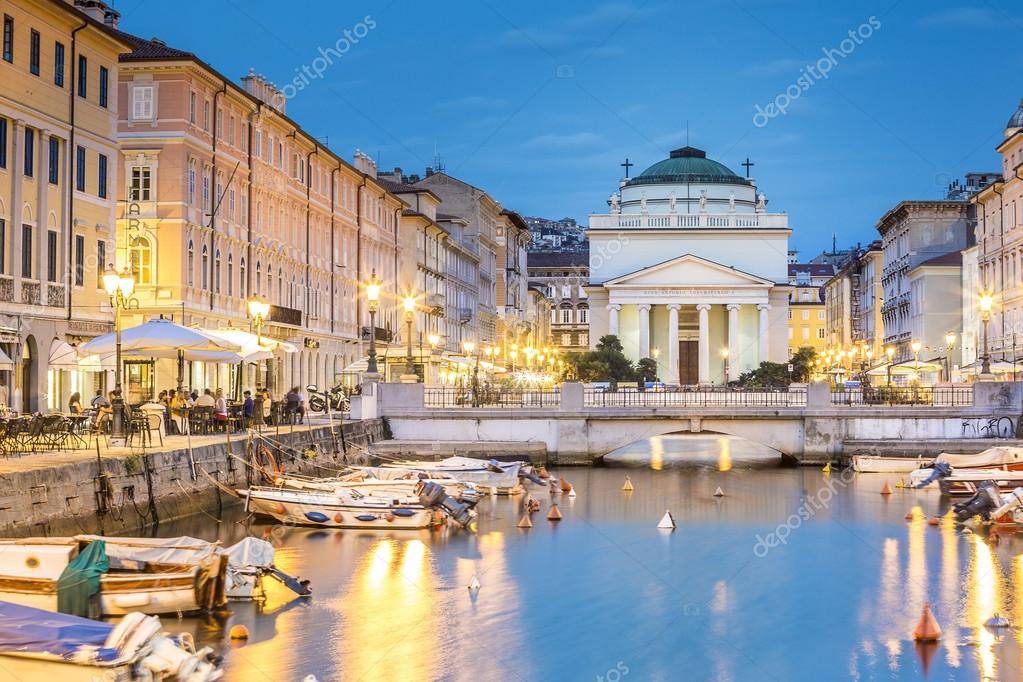
Canal grande in Trieste city center, Italy

Disturbing Facts #1

The following information comes from these sources:

#1

In 1916, the famous Russian mystic Rasputin survived 3 distinct attempts to kill him in quick succession. Assassins had tried to poison him first, then shot him, then finally stabbed him. Somehow Rasputin was still alive. This was short lived, however, as the assassins finally wrapped him in a blanket and tossed him in a river.

#2

In Chinese culture, smaller feet were considered to be more attractive and feminine, so the Chinese took to binding women’s feet together at a young age.

#3

Between 1890 and 1910, Bayer’s heroine was available in almost every drug store you walked in. It was sold as a non-addictive substitute for heroine and it was also used to cure children’s coughs.

#4

23 Disturbing Facts About History That Couldn't Be Taught In School

At first glance, these men look like twins or like the same person. These men had the same name, were sentenced to the same prison, and look nearly identical. They are not in any way related and never met each other prior to prison. They are also the reason fingerprints are now used in the criminal justice system.

#5

There was a form of torture called “The Spanish Donkey”. This was a painful and gruesome form of torture where weights were chained to a naked victim straddling a wood beam. This became such a science that the pain was able to be fine tuned by adjusting the amount of weight.

#6

The Catholic church believed that certain saints were “incorruptible”. While it seems silly in modern science, Saint Cecilia is proving modern science wrong. Saint Cecilia was martyred in 177 A.D., and her body has remained the same in the 1,843 years since. This defies the natural order and 5 of the 8 stages of death.

#7

The horrifies looks on the Guanajuato Mummies are considered by experts to be the most terrifying mummies in existence. Their horrified faces lead many to believe they were buried alive.

#8

“In February of 1948, dozens of ships near Indonesia started receiving distress calls from the Dutch ship SS Ourang Medan.  The messages read “All officers including captain are dead lying in the chart room and bridge. Possibly whole crew dead.”  This was followed by a series of indecipherable Morse Code messages, and then one final one, “I die”.  When the ship was later discovered however, the messages paled in comparison to the bodies of the crew.  Everyone on the ship was dead, and every body was frozen in place looking up at the sun, with arms outstretched and a contorted, almost anguished look on their faces.  And maybe the most strange of all, there were no signs of injuries on any of the bodies.”

#9

Joseph Stalin is one of the most brutal dictators the world has ever known. While he had no problem cutting people out of existence, this dictator did it in his paintings, too. When someone who was in the same painting as him was killed, he would cut them out by retouching the painting.

#10

23 Disturbing Facts About History That Couldn't Be Taught In School

This is not disturbing but it should be here anyway. This monkey became a hero in WW1, given a ribbon, and promoted to the rank of corporal.

#11

There might be fecal matter in your office coffee mug.

#12

A chicken once survived 18 months without a head.

#13

There’s a type of predatory fish that can walk on land.

#14

You shed about a pound and a half of skin a year.

#15

Peanut butter can contain rat hairs.

#16

There’s a species of lizard that shoots blood from its eyes.

#17

Parts of Albert Einstein’s brain is on display at a museum.

#18

Horses can’t vomit

#19

In 7 hours an elephant produces enough poop to outweigh an adult human.

#20

There used to be real human remains on Disneyland’s Pirates of the Caribbean ride.

#21

The Romans used crushed mouse brains as toothpaste.

#22

When Eskimo babies have colds, the mothers suck the snot out of their nose.

#23

The FDA regulations allow 10 insects and 35 fruit fly eggs per 8 oz. of raisins.

#24

The FDA regulations also allow 1 pound of peanut butter to contain 150 bug fragments and 5 rodent hairs.

#25

Butterflies have been known to drink blood.

#26

Your desk, kitchen sink, grocery cart, cellphone, restaurant menu, and ATM all have more bacteria than your toilet bowl.

#27

From London School of Hygiene & Tropical Medicine, 16% of cell phones have poop on them.

#28

Koalas actually eat their mom’s poop

#29

According to the FDA, the average person consumes up to a pound of insects per year, mostly mixed into other foods.

#30

If you smell something, the molecules of that object are sticking to the inside of your nose.

#31

The chance of dying to get your lottery ticket is greater than your chance of winning.

#32

Most of what we know about the stages of hypothermia came from Nazi human experiments.

#33

Male chicks are often tossed into a grinder because roosters aren’t as tasty as hens.

#34

Approximately 2,500 left handed people die every year from using equipment designed for right handed people.

#35

Ice machines in restaurants are usually not cleaned. They have a part called a slime guard which, if seen on a bad day, you would never get ice again.

#36

During WW2, an American plane crashed on a Japanese island. There were 9 men aboard. 8 of them were captured and eaten. The other person was rescued was George H. W. Bush.

#37

The average mattress doubles in weight over the course of 10 years due to the accumulation of dust mites and dust mite poop.

#38

If a male lion takes over a pride he executes all of the cubs.

#39

There are more vacant houses than homeless people in the United States.

#40

15% of the air you breathe in an average metro station is human skin.

#41

There are over 200 corpses on Mount Everest that are used as waypoints for climbers.

#42

In 2008, 3 Texas teens were arrested for digging up a body and using the skull as a marijuana bong.

#43

Leo, the first ‘MGM Lion’ killed his trainer and 2 assistants a day after the filming of the iconic logo.

#44

More people die from suicide in New York than there are murdered.

#45

There is a gypsy tribe in India which believes that death is the greatest celebration and birth is the greatest grief.

#46

Italian serial killer Leonarda Cianciulli, known as the “Soap- Maker of Correggio,” turned her victims into bars of soap and tea cakes, which she gave to guests.

#47

During the filming of The Exorcist, multiple sets burned down, actors got mysteriously injured, and one of the actors, Jack Mcgowran, even died of influenza. Eventually, a priest was brought in to bless the set.

#48

Salt water takes 10 minutes to drown you.

#49

Bananas are radioactive

#50

Around 17ml of blood can substitute for an egg when baking.

Piha, New Zealand

Location

“Piha is a seaside village, west of Auckland, on New Zealand’s North Island. (Google)”

“A laid-back seaside village 45 minutes west of Auckland city, Piha is popular with local kiwis – especially in summertime. The dramatic beach, which is marked at each end by rugged cliffs, is a popular surfing location. The water has strong and often dangerous currents. However, in summer, surf lifesavers patrol an area clearly flagged for swimmers. (https://www.newzealand.com/us/piha/)”

Piha Beach, New Zealand

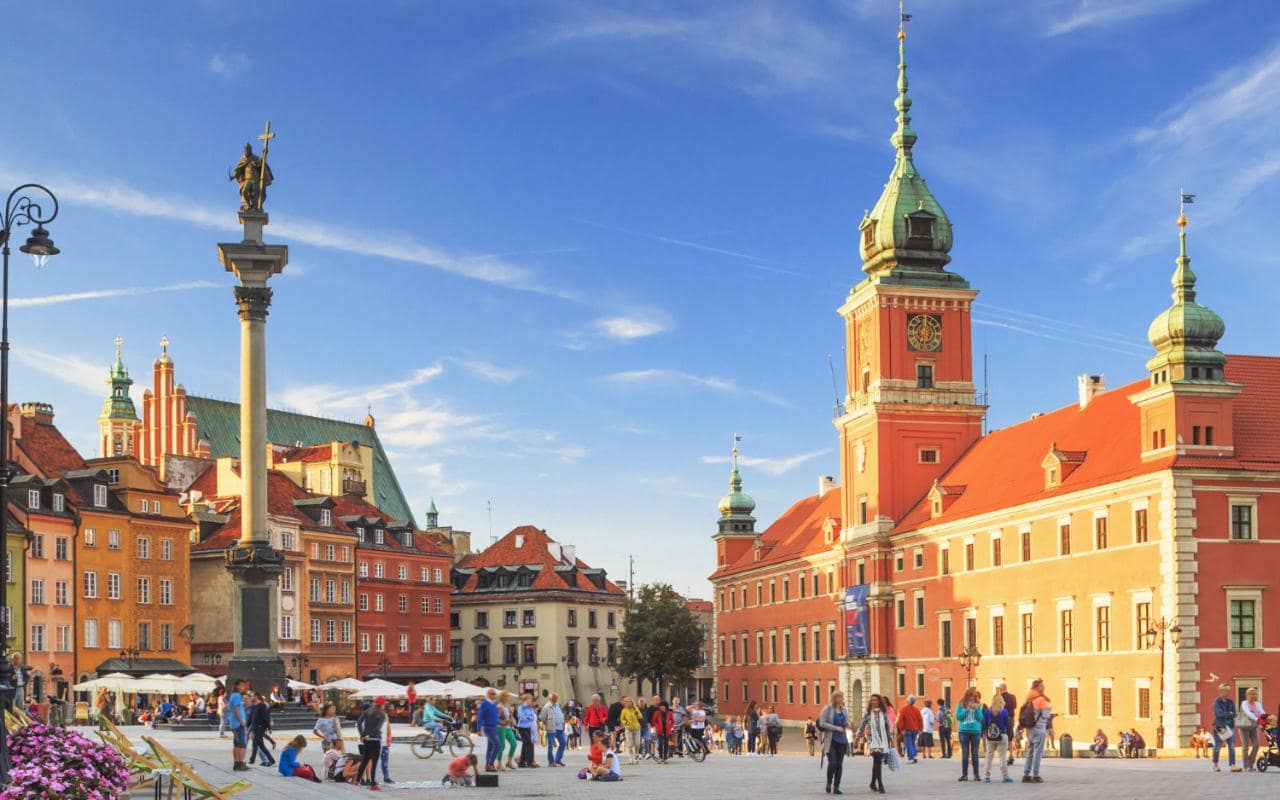
Warsaw, Poland

Warsaw is the capital city of Poland, located in the east-central part of the country. The city is notable among other European cities for its indestructibility. After facing major damage while the Swedish and Prussian occupied the area in 1655-1666, it was attacked again in 1794, when the Russians massacred the people in Praga. In 1944, after the Warsaw Uprising failed, the city was destroyed by Adolf Hitler’s order. However, in 1945, the people of Warsaw returned, after being run out of their town the previous year, and the city resumed its role in the country. Many of the historical buildings and streets were restored exactly to their former selves.

The emblem of Warsaw is a representation to a creature in a legend. In the legend, the creature led a prince to the site of Warsaw and ordered him to found the city. The creature on the emblem is a mermaid with sword and shield in hand. It has been the emblem since the mid 18th century. The motto of the city is “It defies the storms.”

The climate here is moderate and cool, the westerly winds bringing frequent changes of weather the average yearly temperature is in the 40s F (around 8 degrees Celsius). Yearly rainfall averages 21 inches, most of which falls in the summer. Snow continues for 50-64 days a year.

The multinational community of Warsaw was transformed because of WW2. Before the event, the community was composed of Polish, Jews, Germans, and Russians. Today, the population is composed of mostly Poles. The population is mostly Roman Catholic. Early 20th century, the Yiddish-speaking Jews accounted for almost 50 percent of the population. From 1939 to 1945, the remains of the former diversity had been destroyed. Warsaw’s Jews were nearly annihilated by the Nazis and their remaining numbers continue to decrease. The intellectuals have also been decimated, the administrative class connected with the republic before the war dispersed, and the working class diminished by deaths and deportations. After the war, the city had to be repopulated by returning refugees, a vast influx of peasants from the countryside, and families of officials connected with the new communist state. The origin of Warsaw remains obscure.

Bordeaux, France

Bordeaux is France’s greatest city, according to some. It is the hub of the famed wine-growing region, is a port city on the Garonne River in southwestern France. It’s known for its Gothic Cathédrale Saint-André, 18th- to 19th-century mansions and notable art museums such as the Musée des Beaux-Arts de Bordeaux. Public gardens line the curving river quays. The grand Place de la Bourse, centered on the Three Graces fountain, overlooks the Miroir d’Eau reflecting pool. Bordeaux is the ninth-most densely populated European Union city. Producing four times as much wine as the second most famous region in France. Bordeaux is a production powerhouse. It has over 250,000 acres of vines and over 20,000 wine producers in the region. Bordeaux is a fairly safe city, but people should use common sense. Avoid wandering alone at night in the Gare St-Jean, Marché des Capucins and place de la Victoire areas. None of these areas are dangerous, but they can attract shady characters and feel unsavoury after dark. An interesting portfolio of art museums embracing all periods and genres is the icing on the cake to it’s magnificent architectural heritage. This city was under Britain’s control for over 300 years. Much information can be found here. Bordeaux is France’s greatest city, according to some. It is the hub of the famed wine-growing region, is a port city on the Garonne River in southwestern France. It’s known for its Gothic Cathédrale Saint-André, 18th- to 19th-century mansions and notable art museums such as the Musée des Beaux-Arts de Bordeaux. Public gardens line the curving river quays. The grand Place de la Bourse, centered on the Three Graces fountain, overlooks the Miroir d’Eau reflecting pool. Bordeaux is the ninth-most densely populated European Union city. Producing four times as much wine as the second most famous region in France. Bordeaux is a production powerhouse. It has over 250,000 acres of vines and over 20,000 wine producers in the region. Bordeaux is a fairly safe city, but people should use common sense. Avoid wandering alone at night in the Gare St-Jean, Marché des Capucins and place de la Victoire areas. None of these areas are dangerous, but they can attract shady characters and feel unsavoury after dark. An interesting portfolio of art museums embracing all periods and genres is the icing on the cake to it’s magnificent architectural heritage. This city was under Britain’s control for over 300 years. Much information can be found Here, but it may be difficult to understand if there is not any translator option on the website.

Corsica

This island is one of the largest islands in the Mediterranean. Only Sicily, Sardinia, and Cyprus are larger. It lies 105 miles (170 km) from southern France and 56 miles (90 km) from northwestern Italy, and it is separated from Sardinia by the 7-mile (11-km) Strait of Bonifacio. Ajaccio is the capital. Corsica is still commonly described as one of 22 regions of metropolitan France. This island is the birthplace of Napoleon. It is also famous for it’s terrain, natural environment, and the first Corsican constitution, which was drawn up in 1755 for the short-lived Corsican Republic independent from Genoa beginning in 1755 and remained in force until the annexation of Corsica by France in 1769.

A Few Places On The Island

Bonifacio

Bonifacio is a medieval town that lies upon a white limestone cliff on the southern coast of Corsica. Other names for this town is the “Mediterranean’s Sentinel” and the “Citadel of Cliffs”. This town is the source of the name for the 11-kilometer-long Strait of Bonifacio. The islands of Sardinia and Corsica were once joined, but were torn apart by volcanic activity, from which granite rock remained in the waters. This water now has multiple pirate ship wrecks and ancient vessels. This has become an attraction for divers. Founded about 828 AD as a defense against pirates, the town was taken from Pisa at the end of the 12th century by the Genoese. Traditionally, it has remained Genoese, the inhabitants speaking Genoese dialect and refusing to adopt such Corsican customs as the vendetta.

Ajaccio

Ajaccio is the capital of Corsica. It was the birthplace of Napoleon Bonaparte in 1769. His ancestral home, Maison Bonaparte, is currently a museum displaying family heirlooms. Musee French, founded by Napoleon’s uncle, houses a large collection of Renaissance art. Ajaccio’s old town is characterized by pastel-colored buildings, palm-lined streets, and chic cafes.

Bastia

In this city, bars and restaurants line the Old Port, with the Church of St. Jean-Baptiste behind it. Terra Nova was built by Genoese rulers. Nearby is the Cathedral of Ste. Marie, filled with paintings and marble statues. The Governor’s Palace houses the Bastia Museum, showcasing the city’s history.

Calvi

Calvi is a town on the northwest coast of Corsica. It is known for it’s beaches and it’s crescent-shaped bay. An old citadel looks over the water from the bay’s western end, and is home to Baroque St-Jean-Baptiste Cathedral and cobbled streets. Restaurants line the harbor on the Quai Landry esplanade. Perched on a high hill a short distance inland, the chapel of Notre-Dame de la Serra has wide views of the area.

London, UK

When a man is tired of London, he is tired of life; for there is in London all that life can afford.

Samuel Johnson

It is believed that London had started to grow as an important settlement when the Romans arrived in around 43 AD. Before this, there were some smaller settlements that were soon swallowed up by the Roman army. Plenty of unstable times were to get to London, from invasions to power struggles. After the Romans left, the Anglo-Saxons came and were repeatedly attacked by Vikings who came from Scandinavian countries. In Norman times, London became the firm favorite as a center of commerce and a capital city following the construction of Westminster and this was set to stay for good after William the Conqueror built the Tower of London following his victory in 1066. Slaves were brought over to England from Africa during Tudor times, from 1485 – 1603. At the same time, Jews and Muslims as well as Dutch Traders had also begun to arrive and settle in London. These arrivals sowed the seed for London’s diversity that can be seen today. During the 1800’s, the slave trade had been abolished and London’s black communities had grown a lot. More people came from south Asian areas and China. The Jewish population continued to grow as people fled persecution in Eastern Europe. By the time World War II started, even more people came to fill job vacancies from The West Indies, Europe and India. People from the West Indies or the Caribbean were especially in demand and found work on the London Underground railway system. In present day, London has continued to grow in size and diversity. The people of London have a strong reputation for being open-minded and accepting, along with providing a haven who have been ill-treated in their own countries. London has benefitted a lot from having a lot of nationalities, especially after 1945 when there was a shortage of workers after World War 2 ended.

Great Poets of London

Many poets were born in London. In the little list of less than a dozen names, all but two are poets. Those two are Defoe, first and greatest of journalists, and Lamb, most beautiful of essayists and wisest of critics. When we come to the poets there is: Chaucer, Spenser, Milton, Herrick, Cowley, Pope, Gray, Keats and Hood. They were the sons of men carrying on the ordinary trades of her markets. Chaucer’s father was a wine-merchant and tavern-keeper, Milton’s and Gray’s were clerks, Spenser’s a tailor, Pope’s a linen-draper, Keats’s a keeper of a livery-stable, Herrick’s a goldsmith, Cowley’s a stationer, Hood’s a bookseller.

Design a site like this with WordPress.com
Get started